A quiet, decades-long erosion of trust may be the most consequential change few people talk about.
There is a kind of recession that never makes the headlines, because it cannot be measured in dollars or unemployment figures. It is a recession in trust — in our confidence in institutions, in our leaders, in the systems we depend on, and, most corrosively, in one another. Across decades, surveys by the Pew Research Center and Gallup have tracked a long, steady decline in nearly every form of trust, and the consequences ripple outward into everything from politics to commerce to the basic texture of daily life. Trust is the invisible infrastructure that makes a complex society function; when it drains away, the machinery does not stop all at once, but it grinds harder, costs more, and serves us worse. This is a look at what we are losing, why, and whether the decline can be reversed.
I.The Quiet Infrastructure We Take for Granted
It is easy to overlook how much of ordinary life runs on trust, precisely because it usually works invisibly. When you eat at a restaurant, you trust the kitchen. When you take a job, you trust you will be paid. When you sign a contract, deposit money, cross at a green light, or take a prescribed medicine, you are extending a vast web of trust to people you will never meet. A modern economy and society are, at bottom, elaborate machines for cooperating with strangers, and that cooperation is only possible because we extend a baseline assumption of good faith to people we have no personal reason to trust.
Social scientists sometimes call this generalized trust, and its level varies dramatically between societies, with enormous consequences. High-trust societies are more prosperous, more efficient, and more pleasant to live in, because trust lowers the cost of nearly everything. When people assume others are basically honest and reliable, transactions are faster, contracts are simpler, cooperation is easier, and less energy is wasted on suspicion, verification, and self-protection. Trust is, in a very real sense, a form of social wealth — one that does not appear on any balance sheet but underwrites the prosperity that does.
This is why a decline in trust is not a soft, sentimental concern but a hard, practical one. As trust erodes, friction returns to every interaction. We need more contracts, more lawyers, more security, more verification, more insurance against the bad faith we now expect. Cooperation that once happened on a handshake now requires elaborate safeguards. The hidden tax of low trust is paid in the form of everything becoming slower, costlier, and more adversarial — a tax that a society levies on itself the moment its members stop assuming the best of one another.
II.A Long Decline With Many Authors
The erosion of trust did not have a single cause, which is part of why it has been so hard to halt. It accumulated from many sources over many years. Institutions earned some of the distrust through genuine failures and scandals — broken promises, cover-ups, and visible incompetence that taught people, often correctly, that their confidence had been misplaced. A portion of the trust recession is simply the rational response to institutions that did, in fact, prove untrustworthy, and it would be a mistake to treat all declining trust as irrational paranoia.
But other forces drove distrust beyond what the failures warranted. A media and information environment that profits from alarm and conflict steadily emphasizes the worst about every institution and every group, training us to expect betrayal everywhere. Political incentives reward leaders who undermine confidence in rival institutions for short-term gain. And as we have seen elsewhere, the sorting of society into separate, mutually suspicious camps means we increasingly encounter the other side only as a caricature, which makes generalized trust across those lines nearly impossible to sustain.
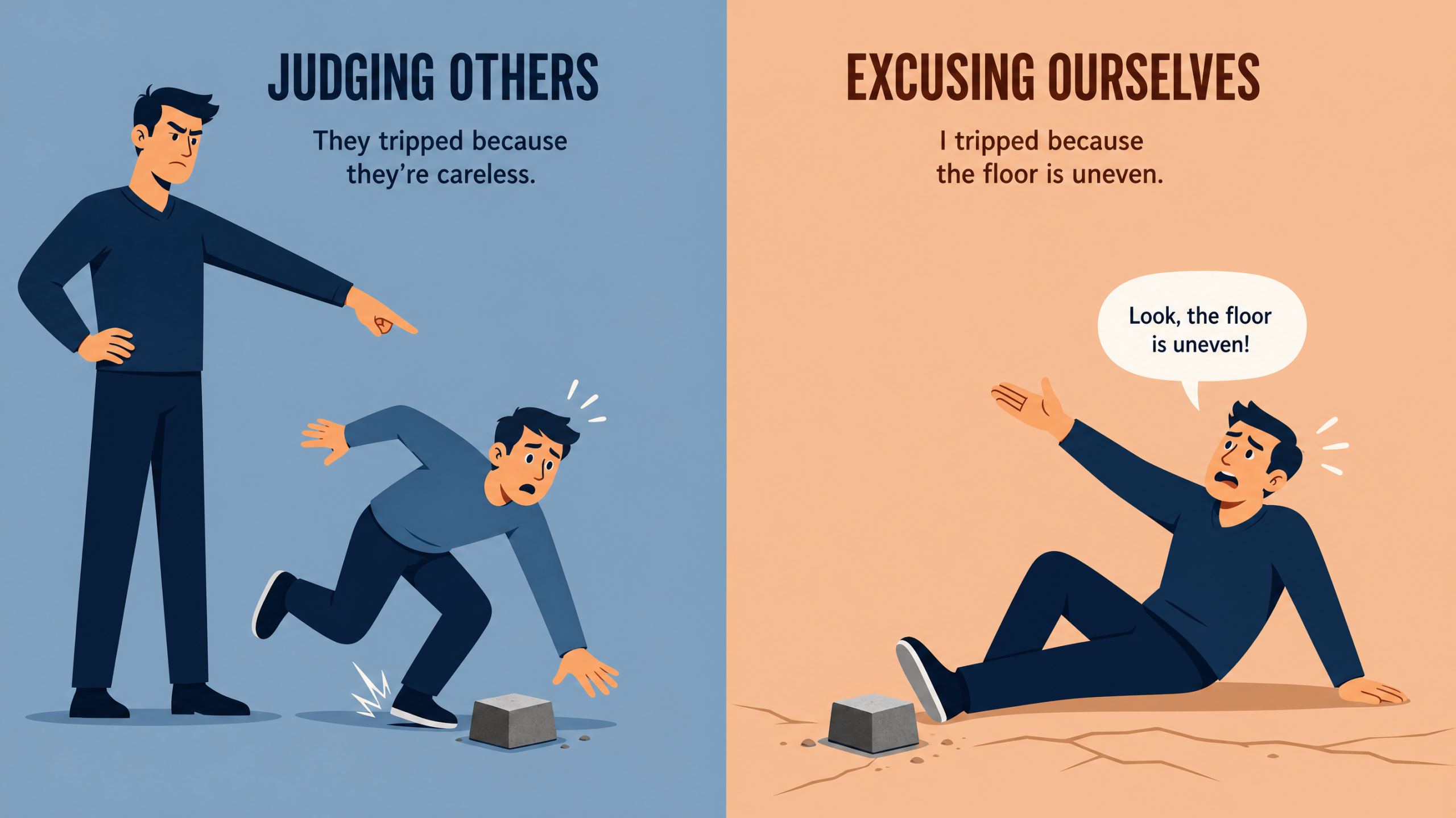
There is also a self-reinforcing quality to the whole process that makes it especially dangerous. Distrust is contagious and self-fulfilling: when we expect others to act in bad faith, we behave more defensively and less generously ourselves, which provokes exactly the behavior we feared and confirms our suspicions. A society that has come to assume the worst of itself will, through that very assumption, produce more of the worst, in a downward spiral that is far easier to enter than to escape. The recession feeds on itself.
“Trust is the invisible infrastructure of a society. It does not appear on any balance sheet — until it is gone, and the cost of its absence appears on every one.”
III.What Low Trust Costs Us in Practice
The damage of the trust recession shows up first in the capacity for collective action. Almost every serious problem a society faces requires people and institutions to cooperate, to make and keep commitments, and to accept short-term costs for shared long-term benefits. All of this depends on trust. When no one believes that others will hold up their end, that institutions will deliver, or that sacrifices will be fairly shared, the cooperation needed to solve big problems becomes nearly impossible. Low-trust societies struggle to do hard things together, even when everyone agrees the things need doing.
Low trust also degrades the quality of public life in subtler ways. It breeds conspiracy thinking, because a population that assumes bad faith everywhere is primed to believe the worst about any event. It rewards cynicism and punishes the earnest, making sincere participation feel naive. And it isolates people, since trust is the precondition for the relationships and community ties that make life meaningful. A person who trusts no one is not liberated but imprisoned, condemned to face a complex, interdependent world alone and on guard.
Perhaps most insidiously, low trust is profoundly demoralizing. There is a heavy psychological weight to living in a world you believe to be populated by the dishonest, the incompetent, and the self-interested, where every institution is presumed corrupt and every stranger a potential threat. Beyond its practical costs, the trust recession exacts an emotional one, robbing people of the basic security and optimism that come from believing they live among others who are, on the whole, decent and reliable. That belief, once lost at scale, is among the hardest things a society can recover.
IV.Trust Is Inherited — Until It Isn’t
One of the quieter dimensions of the trust recession is generational, and it deserves attention because it shapes the future more than any single survey. Trust, to a surprising degree, is learned early and carried forward. People who grow up in high-trust environments — where adults model reliability, where institutions visibly work, where strangers generally prove decent — tend to internalize a baseline assumption of good faith that follows them through life. People who come of age amid visible institutional failure, pervasive cynicism, and a media diet of betrayal internalize the opposite, and they carry that wariness forward too.
This means the trust recession is not merely a snapshot of present attitudes but a transmission belt to the future. A generation that learns distrust as its default does not simply hold low trust now; it tends to pass that disposition to its own children, embedding the recession more deeply with each cycle. The danger is that low trust, having begun as a rational response to real failures, hardens into an inherited cultural trait that persists long after the specific failures that triggered it have faded, becoming a self-perpetuating feature of the society rather than a temporary reaction to circumstance.
But the same dynamic offers a route back, because trust is not only inherited — it is also taught by experience. When younger people encounter institutions that actually work, adults who actually keep their word, and communities where cooperation actually pays off, they revise their expectations accordingly. This is why the local, experiential rebuilding of trust matters so much: it is in concrete, lived interactions, far more than in abstract argument, that a person’s baseline assumption about others is set and reset. The recession will end, if it ends, not because people are persuaded to trust but because they are given reasons to.
V.Whether the Recession Can End
Trust is famously easier to destroy than to build — it accumulates slowly through consistent, reliable behavior and collapses quickly with a single betrayal. This asymmetry makes the trust recession genuinely hard to reverse, but not impossible, and the path back is clearer than it might seem. At the institutional level, trust is rebuilt only the slow way: by institutions actually becoming trustworthy — transparent, accountable, competent, and reliable over a sustained period — until the evidence of their reliability gradually outweighs the memory of their failures. There is no shortcut and no public-relations substitute for simply being worthy of trust over time.
At the level of ordinary citizens, the rebuilding is more within reach than the scale of the problem suggests, because generalized trust is built from the bottom up. Every kept promise, every honest dealing, every act of reliability in our own small sphere is a deposit in the shared account. People who know their neighbors, participate in local life, and engage with others across lines of difference consistently report higher trust, because trust is a residue of contact and cooperation. We cannot single-handedly reverse a national trend, but we can refuse to be the cynics who feed it, and we can build the local trust that the larger kind is ultimately made of.
The most important thing may simply be to resist the despair that the trust recession encourages. Cynicism feels sophisticated and safe, but it is also a self-fulfilling prophecy that guarantees the very world it fears. Choosing to extend trust where it is reasonable, to behave trustworthily ourselves, and to give institutions and people the chance to earn confidence rather than assuming bad faith in advance is not naivety. It is the only way the spiral has ever been reversed — one reliable interaction at a time, repeated until the assumption of good faith becomes, again, the default.
◆ Locally. Knowing neighbors and participating in community life raises generalized trust from the ground up.
◆ Through reliability. Trust is the residue of kept promises and honest dealings, accumulated over time.
◆ Across difference. Real contact with people unlike us does more to build trust than any argument can.
◆ By refusing cynicism. Choosing reasonable trust over reflexive suspicion interrupts the self-fulfilling spiral.
VI.Frequently Asked Questions
Q.Is declining trust just people being paranoid?
Not entirely — some distrust is the rational response to institutions that genuinely failed. But the decline has run well beyond what those failures warrant, driven also by an alarm-driven information environment, political incentives, and social sorting that make distrust self-reinforcing.
Q.Why does trust matter so much economically and socially?
Because a complex society runs on cooperation among strangers, which is only possible when people assume basic good faith. High trust lowers the cost of nearly everything; low trust adds friction, verification, and adversarial safeguards to every interaction.
Q.Can trust actually be rebuilt once it’s lost?
Yes, but slowly and only the hard way: institutions must become genuinely trustworthy over time, and citizens rebuild generalized trust from the bottom up through local participation, reliable behavior, and contact across differences. Refusing reflexive cynicism is itself part of the cure.
Rebuild the Invisible Infrastructure
The trust recession is a quiet crisis with loud consequences. As confidence in institutions, leaders, and one another erodes, friction returns to everything, cooperation on hard problems fails, and a heavy cynicism settles over public life — all in a self-reinforcing spiral.
Trust is easier to destroy than to build, but it is rebuilt the same way it always was: institutions earning it over time, and citizens extending it locally, behaving reliably, and refusing the despair that guarantees the world it fears. The recovery begins with one trustworthy interaction at a time.
Be trustworthy; extend trust where it’s reasonable. That’s how the spiral turns.
This article is for general educational purposes. For research on trust in institutions and one another, see the Pew Research Center and Gallup.