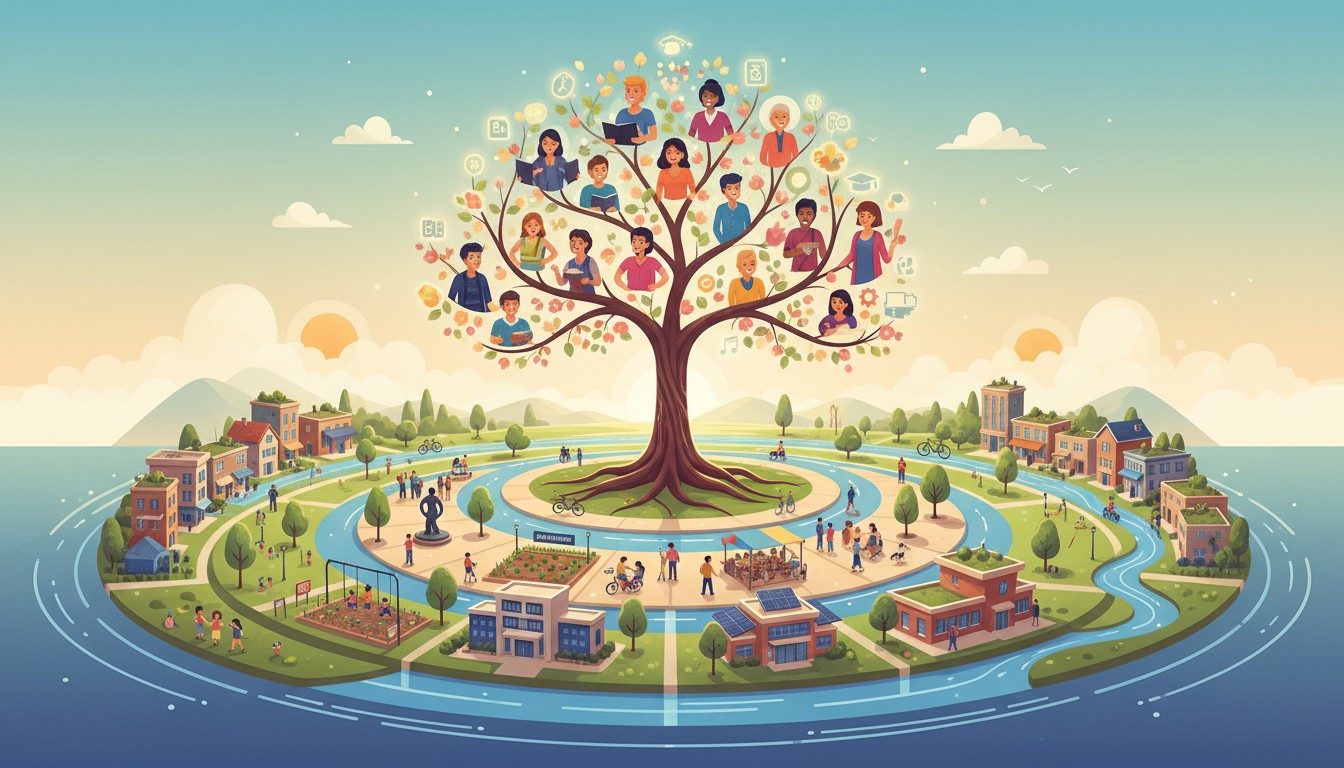
The relationship between place and personality represents one of the most significant yet overlooked influences on human development. While we obsess over genetics, education, and personal choices, the street where we wake up each morning exerts a constant, subtle pressure on our behavior, mood, and identity. Research from environmental psychology confirms what our intuition already knows: our surroundings shape our inner world as much as our outer circumstances.
This dynamic works both ways. We choose neighborhoods based on who we think we are, then those neighborhoods mold us into who we become. A city dweller might select an urban loft for its energy and convenience, only to find their patience and introspection eroding under constant stimulation. A suburban parent might choose a quiet cul-de-sac for safety, then discover their social network and spontaneity withering in the isolation. Understanding this reciprocal relationship empowers us to make conscious choices about where we live—and who we want to become.
The Dialectic of Place: How Environments and Identities Co-Create Each Other
The interaction between people and place operates as a constant, intimate dialectic. Joseph Rykwert, in his exploration of urban form, observed that we cannot tinker with our cities without making adjustments to society itself, and vice versa. This relationship is never static—it morphs, shifts, and evolves as we do. The physical environment provides the stage, but our actions write the play, which in turn reshapes the stage for future actors.
Our connection to place operates on multiple levels simultaneously. Practically, neighborhoods determine our commute times, access to resources, and daily routines. Emotionally, they become the tangible landscape of memory, embedding themselves into our personal narratives. As Rebecca Solnit eloquently expressed, the places where we live become part of who we are, and we become them. They possess us as much as we possess them.
This co-creation manifests in subtle ways. The corner coffee shop where you overcame a career setback becomes a symbol of resilience. The park bench where you had a breakthrough conversation with your teenager transforms into sacred ground. These spaces aren’t just backdrops—they’re active participants in our life stories, storing our experiences and reflecting them back to us, reinforcing the identities we’re constructing.
The Place Identity Cycle
Stage 1: We select environments that reflect our current self-concept
Stage 2: These environments reinforce certain behaviors and suppress others
Stage 3: Our personalities gradually adapt to fit the environmental demands
Stage 4: We internalize these changes as “who we are” and seek new environments that match
Geopsychology: The Emerging Science of Place and Personality
The emerging field of geopsychology examines how geographic locations influence personality development, worldview, and behavioral traits. This discipline sits at the intersection of environmental psychology, sociology, and neuroscience, exploring why a New Yorker who moves to a mountain town might become more outgoing and friendly, or why a rural transplant to a metropolis develops new levels of assertiveness and competitiveness.
Mental health counselor Kristie Tse explains that different areas foster unique values and behaviors that shape individual worldviews over time. A fast-paced urban environment encourages traits like quick decision-making, assertiveness, and adaptability to constant change. Conversely, a tranquil rural setting promotes patience, introspection, and a deeper connection to natural rhythms. These aren’t superficial adaptations—they’re genuine personality shifts that persist even when individuals return to their original environments.
Geographic location also dictates access to resources and experiences that influence personality development. Cities offer exposure to diverse perspectives, cultural events, and professional networks that foster openness and cognitive flexibility. Rural areas provide community cohesion, outdoor recreation, and slower paces that nurture different strengths. Understanding these mechanisms helps individuals make intentional choices about where to live based on who they want to become.
Recent research in geopsychology suggests that while genetics provide a baseline, environmental factors can significantly alter personality expression. The same neighborhood influences two individuals differently based on their backgrounds, life experiences, and social circles, creating unique developmental pathways even in identical environments.
The Physical Environment: Architecture That Shapes Behavior
The physical infrastructure of our neighborhoods—buildings, streets, parks, and public spaces—acts as a silent sculptor of daily behavior. Urban planners have long understood that design influences everything from walking habits to social interaction frequency, but residents rarely recognize these subtle manipulations.
Consider street width. Narrow, tree-lined streets with slow traffic encourage spontaneous conversations between neighbors. Wide, high-speed arterial roads create barriers that fragment communities. Research from public health studies shows that residents living near walkable streets with mixed-use development report stronger social cohesion and better mental health outcomes than those in car-dependent subdivisions.
Building design matters profoundly. Mixed-use buildings that combine residential, commercial, and community spaces create natural gathering points and increase the likelihood of casual encounters. Single-use zoning isolates activities, requiring deliberate travel for each need and reducing spontaneous interaction opportunities. A neighborhood with a corner grocery, coffee shop, and community center within walking distance fosters more social connections than one where every destination requires a car trip.
Green spaces function as psychological anchors. Parks, community gardens, and tree-lined sidewalks reduce stress, improve cognitive function, and provide neutral territory where diverse residents can interact as equals. The presence or absence of these amenities shapes not just physical health but social capital—the network of relationships that enable communities to function effectively.
The Social Environment: Community as Identity Forge
Beyond physical design, the social environment—community norms, values, and relationships—exerts perhaps even stronger influence on personality development. The collective identity of a neighborhood shapes individual identity through shared experiences, collective memory, and social expectations.
Social cohesion, defined as the strength of relationships and sense of solidarity among neighbors, directly impacts mental health and personality traits. Communities with high cohesion demonstrate lower rates of depression and anxiety, while fostering traits like trust, empathy, and collective responsibility. Conversely, neighborhoods lacking social support networks create what researchers call “toxic stress”—chronic activation of the body’s stress response system that rewires brain development and personality.
The stories and memories embedded in a place become part of its identity and, by extension, its residents’ identities. Local tragedies like the Grenfell Tower fire create communal grief that shapes collective consciousness. Successes like a rebuilt community pier generate pride and empowerment. These narratives aren’t just historical facts—they’re identity markers that residents internalize and pass down.
Economic conditions within neighborhoods further influence personality development. Research consistently shows that residents of disadvantaged communities experience higher stress, lower self-reported health, and greater mental illness risk. However, these same challenging environments can foster resilience, adaptability, and resourcefulness. The coping mechanisms developed in response to economic hardship become ingrained personality traits that persist even if individuals later move to more affluent areas.
Toxic Environments: When Neighborhoods Harm Development
Not all neighborhood effects are positive. Toxic environments—characterized by pollution, crime, noise, social disorder, and economic deprivation—can inflict lasting damage on personality and health. Children are particularly vulnerable, as their developing brains and personalities absorb environmental stressors more deeply.
Exposure to environmental hazards like lead, mold, and air pollution causes neurodevelopmental impairments that alter personality trajectories. Children in polluted areas show increased aggression, reduced impulse control, and impaired emotional regulation. These effects can persist into adulthood, shaping everything from career success to relationship stability.
Chronic stress from living in high-crime neighborhoods overwhelms coping mechanisms, leading to what researchers call “toxic stress.” This constant activation of the body’s stress response system impairs cognitive and emotional development, increasing risky behaviors and reducing long-term health outcomes. The cumulative burden of harmful neighborhood conditions creates a developmental cascade that limits life opportunities.
However, even in toxic environments, individual and community resilience can flourish. Community-led initiatives to improve neighborhoods—like rebuilding a destroyed pier through local effort—create empowerment narratives that counteract negative effects. These projects demonstrate that while environments shape us, we retain agency to shape them in return.
Signs Your Neighborhood May Be Harming Your Development
• Persistent anxiety or hypervigilance when leaving home
• Feeling disconnected from neighbors despite proximity
• Chronic stress symptoms (poor sleep, irritability, fatigue)
• Limited access to green spaces or community gathering spots
• Few opportunities for spontaneous social interaction
Urban vs. Rural: Different Psychological Terrains
The urban-rural divide creates distinctly different personality-shaping environments. Cities expose residents to diverse perspectives, cultures, and experiences that foster adaptability, openness to new ideas, and tolerance for ambiguity. The sheer density of people requires developing skills in boundary-setting, assertiveness, and filtering overwhelming stimuli.
Urban environments also cultivate what researchers call “networked individualism”—the ability to maintain loose ties with many people while relying less on deep community bonds. This skill set serves well in professional contexts but can leave city dwellers feeling isolated despite being surrounded by millions. The paradox of urban loneliness reflects this trade-off: increased social opportunities alongside decreased social cohesion.
Rural settings, conversely, strengthen community ties and connection to nature. Residents often develop stronger cooperation skills, deeper relationships with neighbors, and a heightened sense of responsibility to the collective. The slower pace encourages patience, reflection, and appreciation for natural cycles. However, rural isolation can limit exposure to diversity and reduce opportunities for certain personality traits—like cosmopolitanism or rapid adaptability—to develop.
Climate and geography within these settings further influence personality. Mountain towns like Park City, Utah, foster outdoor enthusiasm and laid-back attitudes. Coastal communities develop maritime cultures that shape local identity. Desert cities create unique social rhythms. These geographic signatures become part of residents’ personalities, often persisting even if they relocate.
Choosing Your Place Intentionally: Aligning Location with Life Goals
Recognizing the neighborhood effect empowers intentional living. Rather than defaulting to familiar environments or purely practical considerations like commute time, you can select neighborhoods that actively support the person you’re becoming or want to become. This decision requires honest self-assessment and clarity about your values and goals.
Start by identifying personality traits you want to develop. Seeking greater patience and connection to nature? A rural or semi-rural setting with access to hiking trails and community gardens might serve you. Wanting to boost assertiveness and adaptability? A dense urban neighborhood with diverse demographics and fast-paced energy provides the right training ground. Aspiring to build strong community ties? Look for neighborhoods with active associations, local businesses, and walkable commercial districts.
Evaluate potential neighborhoods through a “personality lens” during house-hunting. Visit at different times of day. Observe how residents interact. Notice the presence or absence of gathering spaces. Talk to locals about community life. Ask yourself: Does this place feel aligned with who I want to be? Will it challenge me in growth-promoting ways or reinforce limiting patterns?
Consider life stage compatibility. A neighborhood perfect for a young professional might feel isolating for a new parent. An area ideal for families might feel stifling for retirees seeking adventure. The “best” neighborhood is subjective—the best one for your current and anticipated life stage is what matters.
Neighborhood Personality Audit
Values Alignment: Does the community prioritize what matters most to you?
Social Climate: Are interactions warm, distant, competitive, or collaborative?
Developmental Fit: Will this place support who you’re becoming?
Resource Access: Does it provide opportunities aligned with your growth goals?
Exit Strategy: Can you leave if the fit proves wrong, or are you locked in?
Community Power: Shaping Your Environment to Shape Yourself
The most empowering aspect of understanding the neighborhood effect is recognizing your agency. While environments shape us, we can also shape environments through collective action. Community-led initiatives demonstrate that residents aren’t passive recipients of neighborhood influences—they’re active co-creators.
Successful neighborhood transformations abound. Residents who rallied to rebuild a destroyed pier created not just a physical structure but a narrative of empowerment that reshaped community identity. Community gardens transform abandoned lots into gathering spaces that foster cooperation and connection. Neighborhood associations that advocate for traffic calming measures create safer, more social streets.
These initiatives work on two levels. They physically improve the environment while psychologically empowering participants. The act of collectively shaping your surroundings builds confidence, social bonds, and a sense of efficacy that transfers to other life domains. You become the architect of both your neighborhood and yourself.
Even small actions matter. Organizing a block party creates temporary community space. Starting a neighborhood book club builds intellectual connections. Advocating for a park renovation improves collective wellbeing. Each action ripples outward, influencing both the physical environment and the social fabric that shapes everyone who lives there.
The Digital Age: Virtual Neighborhoods and Identity
In an era of remote work and digital nomadism, physical neighborhoods compete with virtual communities for influence. Online spaces create new forms of identity formation, but they lack the multi-sensory richness of physical places. A Discord server can provide social connection, but it doesn’t offer the smell of rain on pavement, the sound of neighborhood children playing, or the tactile experience of tending a community garden.
The most resilient identities integrate both physical and virtual neighborhoods. Someone might maintain strong ties to a professional Slack community while building deep relationships in their apartment building. The key is recognizing that different environments serve different developmental needs and being intentional about cultivating both.
Virtual neighborhoods offer advantages: they transcend geography, connect niche interests, and provide support during physical isolation. However, they shouldn’t completely replace physical community. The ideal approach involves using digital tools to enhance, not substitute for, place-based relationships.
Your Place, Your Self
The neighborhood effect reveals a profound truth: we are not isolated individuals crafting identities in vacuums. We are embedded beings, constantly shaped and reshaped by the physical and social environments we inhabit. From the width of our streets to the strength of our community bonds, every aspect of our neighborhoods leaves its mark on who we become.
Understanding this influence doesn’t condemn us to environmental determinism. Rather, it empowers us to choose our places intentionally, to shape our surroundings actively, and to recognize the subtle ways our environments mold us. Whether you’re selecting a new home, evaluating your current neighborhood, or considering a move, ask the geopsychology question: How will this place shape who I am?
Choose wisely, engage actively, and remember that the relationship between you and your place is a lifelong conversation—one that will continue shaping your identity for as long as you call it home.
Key Takeaways
The neighborhood effect describes the powerful, reciprocal relationship where we shape our environments and are simultaneously shaped by them, influencing personality, values, and behavior.
Physical design elements—walkability, green spaces, building types—directly impact social interaction frequency and mental health outcomes.
Social environments foster traits like trust and empathy through cohesion, or conversely, create toxic stress through isolation and disorder.
Urban, suburban, and rural settings cultivate distinctly different personality traits through varying paces, diversity levels, and community structures.
Understanding the neighborhood effect enables intentional place selection and active community shaping, empowering individuals to become co-creators of their environments and identities.