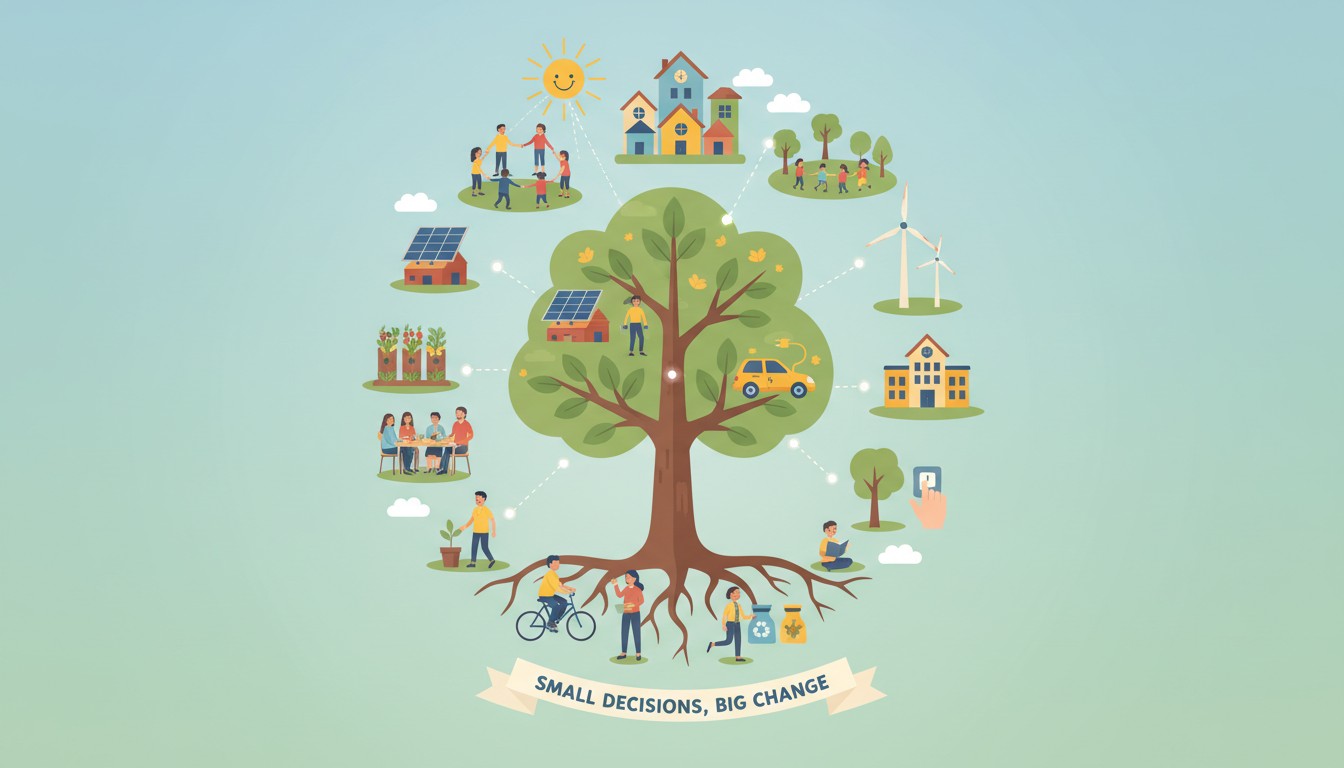
The decisions that most intimately shape our lives aren’t made in Washington or state capitals—they’re made in church basements, school board chambers, and neighborhood association meetings. Local ordinances determine whether you can park on your street, how late your neighbor can have a loud party, and what kind of businesses open on your block. Yet research from civic participation studies shows that fewer than 27% of eligible voters participate in local elections, and attendance at most community meetings struggles to reach double digits.
This participation gap creates a paradox: the level of government with the most direct impact on our daily experiences receives the least attention. While we obsess over presidential tweets and congressional gridlock, the zoning board quietly rezones the lot next door for a high-rise that will block your morning sunlight. Understanding how grassroots power operates—and learning to wield it—transforms you from a passive recipient of decisions into an active architect of your environment.
The Invisible Architecture: How Local Decisions Build Your World
Every aspect of your daily routine rests on a foundation of local choices. The width of your sidewalk, the speed limit on your street, the placement of crosswalks—these aren’t random facts of nature but deliberate decisions made by people you’ve probably never met. Urban planners call this the “built environment,” but it’s more accurate to call it the negotiated environment, shaped through countless small compromises and power struggles.
Consider something as mundane as the timing of traffic lights. A transportation committee meets monthly to review signal timing, taking input from residents, businesses, and emergency services. A five-second adjustment can determine whether a neighborhood becomes a rush-hour cut-through or remains a quiet side street. That adjustment affects your property values, your children’s safety, and your daily stress levels—yet the decision process happens in a public meeting room that sits empty except for a handful of regular attendees.
Local business licensing creates similar invisible impacts. A city council votes to require special permits for food trucks, effectively protecting brick-and-mortar restaurants while limiting consumer choice and entrepreneurial opportunities. Another town streamlines the process, encouraging mobile vendors that activate underused public spaces. These choices ripple through the local economy, affecting who can afford to start a business, what food options exist in different neighborhoods, and how vibrant public spaces feel.
The cumulative effect of these micro-decisions creates macro-outcomes. Neighborhoods with active resident participation tend to have better parks, safer streets, and more responsive public services. Communities where engagement is low often struggle with neglected infrastructure, inconsistent code enforcement, and policies that serve narrow interests rather than broad public good. The difference isn’t resources—it’s the presence or absence of grassroots pressure.
The Decision Tree: Who Controls What You Experience
Federal: Medicare, Social Security, defense policy, interstate commerce
State: Medicaid, education funding, criminal law, professional licensing
County: Property assessments, sheriff services, public health programs
Local: Zoning, sidewalks, police conduct, parks, libraries, trash collection, street maintenance, business permits, school curricula
The Psychology of Local Ignorance: Why We Look Up, Not Around
If grassroots power is so impactful, why do we consistently ignore it? The answer lies in a combination of cognitive biases, media incentives, and educational gaps that train our attention upward rather than outward.
The Glamour Bias: We’re Drawn to High Drama
Presidential elections operate like reality TV—high stakes, clear villains and heroes, dramatic debates that generate endless commentary. Local zoning hearings lack this narrative appeal. They’re often technical, slow-moving, and require specialized knowledge to follow. Our brains are wired to pay attention to dramatic threats and charismatic leaders, not to dry discussions about stormwater management.
Media coverage reinforces this bias. A national outlet can reach millions with a single story about congressional dysfunction, generating advertising revenue. A local paper covering a city council meeting serves a much smaller audience with less sensational content. As local journalism has collapsed—losing more than 2,500 newspapers since 2005—this coverage gap has widened dramatically.
The Complexity Overload: When Details Paralyze
Local governance involves mind-numbing complexity. Understanding a single zoning change requires grasping legal terminology, urban planning principles, and economic impact assessments. Most citizens lack the time and expertise to parse these details, creating a psychological barrier that feels insurmountable.
This complexity serves as a gatekeeping mechanism. Those with professional training (lawyers, developers, career activists) can navigate the system while ordinary residents remain excluded. The result is a democracy that works well for the few who’ve mastered its intricacies while alienating the many who haven’t.
The Education Gap: Civic Illiteracy Starts Early
American civic education focuses overwhelmingly on federal government—Congress, the presidency, Supreme Court cases. Students memorize the branches of government but rarely learn how a city council operates or why planning commission seats matter. This curriculum choice isn’t accidental; it’s easier to teach abstract principles than messy local politics.
The consequence is generations of adults who can explain checks and balances but have no idea how to influence a local ordinance. They know they have a First Amendment right to petition but don’t know which meeting to attend or what to say when they get there. This knowledge gap creates a participation vacuum that special interests happily fill.
Grassroots vs. GrassTops: Understanding Power Distribution
Power in local governance operates on two levels: grassroots (community-driven) and GrassTops (institutional leadership). GrassTops power sits with elected officials, appointed boards, and administrative staff. They hold formal authority to approve projects, allocate budgets, and set policy. Grassroots power resides with residents, neighborhood associations, and informal community networks. They lack formal authority but possess something equally potent: local knowledge, collective action capacity, and electoral influence.
The relationship between these levels is often misunderstood. GrassTops leaders appear powerful, but they’re ultimately accountable to grassroots constituents. A city council member who ignores resident input on a controversial development risks being voted out. A school board that dismisses parent concerns about curriculum faces organized opposition.
However, grassroots power only activates when community members organize. A single angry email is easily ignored. A petition signed by 200 neighbors requires attention. A packed public hearing where 50 residents speak with one voice can derail a proposal. The key is coordination and persistence.
Power Mapping Your Community
Formal Power: Mayor, city council, planning commission, school board, zoning board
Informal Power: Neighborhood association presidents, PTA leaders, local business owners, clergy, veteran community organizers
Influencers: Active social media users, letter-to-editor writers, community event organizers
The Silent Majority: Regular residents who rarely speak up but vote and form the base of potential grassroots movements
The Multiplier Effect: How Small Decisions Cascade
Grassroots decisions don’t exist in isolation—they cascade through systems, creating outcomes far larger than their origins. This multiplier effect explains why a single neighborhood meeting can reshape a city’s trajectory.
Consider a community garden proposal. Initially, it seems minor—turning a vacant lot into growing space. But the effects multiply: the garden beautifies the block, reducing vandalism and increasing property values. It provides fresh produce in a food desert, improving public health. It creates a gathering space where neighbors meet, building social capital that can be mobilized for other issues. It teaches children about nutrition and ecology. It captures rainwater, reducing storm runoff. Each benefit spawns secondary benefits, creating a ripple effect that transforms the entire neighborhood.
This cascade operates in reverse too. A decision not to maintain a park leads to decreased use, which encourages illicit activity, which drives families away, which reduces neighborhood cohesion, which lowers property values, which decreases tax revenue, which leads to further cuts in services. Small neglect, big consequences.
The Tipping Point Phenomenon
Grassroots movements often work silently for long periods before suddenly achieving breakthrough. This is the tipping point phenomenon: a critical mass of small actions triggers a larger shift. A neighborhood might organize for years before a single confrontation with developers forces city officials to finally address long-neglected infrastructure needs.
Austin’s “Community Engagement” initiatives demonstrate this principle. Initially, only a few residents attended meetings. But persistent organizing eventually created a coalition large enough that the city adopted new policies prioritizing equitable development. Years of small, frustrating efforts culminated in a policy shift that will affect housing for decades.
The Cascade Effect in Action
Initial Decision: Neighborhood association proposes traffic calming measures
Direct Result: Slower traffic speeds, safer streets for pedestrians
Secondary Effects: More families walk to school, increasing social connections and reducing carbon emissions
Tertiary Effects: Property values rise, attracting new businesses that serve walkable communities
Quaternary Effects: City adopts similar measures citywide, creating a cultural shift toward pedestrian-first design
The Participation Paradox: Why We Ignore What Matters Most
The paradox of local engagement is that while these decisions affect us most directly, we invest least effort in influencing them. Several psychological and structural factors explain this counterintuitive behavior.
The Visibility Problem
Federal decisions blast through our newsfeeds daily. Local decisions arrive via cryptic legal notices in newspapers no one reads or PDF agendas posted on obscure government websites. The invisibility of local governance makes it easy to ignore—out of sight, out of mind. Most residents don’t know these meetings exist, let alone when and where they occur.
The Effort-Reward Miscalculation
Human brains miscalculate the ROI of civic participation. Voting for president feels significant because millions do it simultaneously. Attending a neighborhood meeting feels insignificant because only a handful show up. This calculation error ignores the fact that your voice carries vastly more weight in a local meeting where decisions are made by a dozen people than in a national election decided by millions.
The Time Poverty Trap
Local participation requires consistent time investment. You can’t just show up once and be done. Meetings happen monthly, sometimes weekly. This schedule favors retirees, the independently wealthy, and those with flexible schedules—exactly the demographic least affected by many local policies. Working parents, shift workers, and struggling entrepreneurs face genuine time constraints that make participation nearly impossible.
Real-World Impact: Grassroots Victories That Reshaped Communities
The abstract becomes concrete through examples. These case studies demonstrate how small groups of organized residents achieved outsized impact through persistent grassroots action.
The Park That Saved a Neighborhood
In a declining Detroit neighborhood, a group of residents noticed an abandoned lot becoming a dumping ground. Rather than waiting for city intervention, they organized weekend cleanups, then formalized as a nonprofit, then secured a lease from the city. Over five years, they transformed the lot into a community park with gardens, a playground, and event space. Property values within three blocks increased 40%. Crime rates dropped. The park became a gathering space that rebuilt social cohesion. What started as three people with trash bags ended as a neighborhood renaissance.
The School Board That Changed Curriculum
A group of parents in a suburban district grew concerned about the lack of financial literacy education. They attended school board meetings, presented research, and proposed a pilot program. Initially dismissed, they persisted—gathering signatures, meeting with individual board members, and organizing other parents. After a year of pressure, the board approved a semester-long personal finance course for high school seniors. Within three years, the program expanded district-wide and became a model for the state. Those parents’ children graduated better prepared for adult life because a dozen people refused to accept the status quo.
The Traffic Calming That Saved Lives
After a child was struck by a car on a residential street, neighbors demanded action. They documented speeding data, photographed near-misses, and presented evidence to the transportation committee. Their persistent advocacy led to speed humps, a narrowed roadway, and improved crosswalks. In the five years since, zero accidents have occurred on that stretch. Those changes now protect every family who walks to the nearby elementary school, including many who never knew the effort required to make their route safe.
The Compound Effect: Long-Term Grassroots Power Accumulation
Grassroots power operates like compound interest—small, consistent investments generate exponentially larger returns over time. A resident who attends one meeting becomes known to officials. After three meetings, they’re recognized as a regular. After six, they’re solicited for input. After a year, they’re appointed to a committee. After several years, they run for office or become the trusted advisor to those who do.
This accumulation effect explains why longtime community activists wield disproportionate influence. They’ve built relationships, accumulated institutional knowledge, and demonstrated reliability. They’ve earned the benefit of the doubt. Their calls get returned. Their opinions carry weight not because they’re inherently more valuable, but because they’ve invested the time to build credibility.
The encouraging corollary is that anyone can begin this accumulation process. You don’t need special qualifications or connections. You just need consistent presence. Show up. Speak respectfully but firmly. Follow through on commitments. Build coalitions. Over time, you become the person others look to when issues arise.
Practical Strategies: How to Activate Your Local Power
Understanding grassroots power is useless without action. Here are concrete strategies for moving from observer to influencer.
Start With Observation
Begin by attending meetings without speaking. City council, school board, planning commission—choose one and just watch. You’ll learn the rhythms, the key players, the unwritten rules. This observation period builds confidence and prevents rookie mistakes. Most meetings are open to the public and schedules are posted online. The National League of Cities provides resources for understanding local government structures.
Find Your Issue
Don’t try to care about everything. Pick one issue that directly affects you—traffic safety, park maintenance, school curriculum, sidewalk repair. Focused energy beats diffuse attention. Your personal stake provides authentic motivation and gives you credibility when you speak. Others will listen because you’re clearly not a gadfly complaining about everything—you’re a neighbor with a specific, reasonable concern.
Build a Micro-Coalition
You don’t need an army—three to five committed people can move mountains. Talk to your immediate neighbors. Find the people who share your concern. Meet for coffee to strategize. Divide tasks: one person researches, another handles social media, a third speaks at meetings. This distribution makes participation sustainable for busy people.
Master the Process
Every local body has specific procedures for public input. Learn them. When is public comment allowed? How long can you speak? Should you submit comments in writing beforehand? Following these rules signals respect and increases your effectiveness. A well-timed, concise comment that addresses the specific agenda item carries far more weight than a passionate rant during the wrong portion of the meeting.
Leverage Multiple Channels
Don’t rely solely on formal meetings. Write letters to the editor (they’re widely read by officials). Post on neighborhood social media groups. Talk to local business owners. Attend community events and raise your issue casually. This multi-channel approach creates a sense of pervasive concern that officials can’t ignore.
Your Power Is Hiding in Plain Sight
The grassroots power shaping your daily life isn’t a secret society or an exclusive club. It’s the cumulative effect of ordinary people choosing to show up, speak up, and stand up for their communities. The invisible hands guiding your world belong to your neighbors—the ones who attend meetings, write letters, and refuse to accept that “that’s just how things are.”
Your power to influence these decisions doesn’t depend on wealth, connections, or expertise. It depends on one thing: your decision to participate. The meeting is happening whether you’re there or not. The decision is being made whether you weigh in or not. You can be the person who shapes the outcome, or you can be the person who lives with the consequences.
The choice is yours. Start small. Pick one meeting. Find one issue. Talk to one neighbor. Your grassroots journey begins with a single step into a room where decisions are made—and where your voice, finally, can be heard.
Key Takeaways
Local decisions—about zoning, schools, traffic, parks—directly shape daily life more than federal policies, yet receive far less public attention and participation.
Cognitive biases, complexity aversion, and civic education gaps train our attention upward, causing us to ignore the grassroots power hiding in plain sight.
Grassroots movements operate through a multiplier effect where small, persistent actions create cascading impacts that reshape communities over time.
Effective local engagement requires focused energy, consistent presence, and coalition-building—not special expertise or large numbers.
Anyone can activate grassroots power by attending meetings, identifying key issues, building micro-coalitions, and patiently accumulating influence through sustained participation.